
UPUtah Property Playbook

Pricing & market exposure

Your List Price Does More Than Set an Asking Number

Your price helps determine which buyers see the property, which homes they compare it with, whether they schedule a showing, and whether enough qualified buyers become interested at the same time to create genuine competition.

Direct answer: the objective is not simply to choose the highest asking price. It is to position the property where the market has the strongest opportunity to respond.

Residential street at dusk with mountains in the background

Wasatch Front, Utah

The same property can look compelling, average, or overpriced — depending entirely on where it's positioned.

The environment

Supply and Demand Determine the Environment

A property does not compete with every home in Utah. It competes with the reasonable alternatives qualified buyers can actually choose instead — in a similar area, a similar price range, at approximately the same time, with similar functionality, for a similar monthly payment.

Supply

  • Active competing listings
  • New construction
  • Recently reduced properties
  • Listings returning to market
  • Nearby communities
  • Different property types solving the same buyer need

Demand

  • Searching in the applicable price range
  • Financially capable of buying
  • Interested in the property type and location
  • Comfortable with the condition
  • Motivated enough to act now

Your home’s competition is not simply the last home that sold. Its immediate competition is what buyers can choose instead today.

Recent comparable sales help estimate value. Active competing listings influence the buyer’s immediate decision — both matter, but they answer different questions.

The competitive set

Price Determines Which Homes Buyers Compare Yours Against

The same property can appear compelling in one price range, average in another, and overpriced when compared with superior alternatives. Here's how relative positioning tends to play out — without promising a specific result.

Below the expected market range

Search exposure
Appears in more buyers' saved searches and price filters.
Buyer pool
Wider — includes buyers who might otherwise be looking one range down.
Competing inventory
Fewer nearby listings compete directly on price.
Showing potential
Often higher, especially in the first one to two weeks.
Buyer urgency
Can increase if several qualified buyers notice at once.
Market-time risk
Lower, but a fast sale isn't guaranteed.
Negotiating position
Can strengthen if genuine competition develops — weakens if it doesn't.

Within the expected market range

Search exposure
Matches the range most comparable buyers are actually searching.
Buyer pool
The buyers who are genuinely evaluating this type of property.
Competing inventory
Directly comparable to similar active listings.
Showing potential
Steady, tied to how the property compares on condition and presentation.
Buyer urgency
Ordinary — driven by the buyer's own timeline, not scarcity.
Market-time risk
Typical for the area and property type.
Negotiating position
Depends on how the property compares to its real alternatives.

Above the expected market range

Search exposure
Missed by buyers whose search filters cap below this price.
Buyer pool
Narrower — competes with a smaller, pricier set of alternatives.
Competing inventory
Now includes homes with more space, condition, or features.
Showing potential
Often lower relative to comparable, correctly priced listings.
Buyer urgency
Reduced — buyers feel less pressure to act quickly.
Market-time risk
Higher; longer time on market becomes more likely.
Negotiating position
Can weaken over time as the listing ages.

Well above the expected market range

Search exposure
Excluded from most relevant buyer searches entirely.
Buyer pool
Very narrow — may only include buyers unaware of true alternatives.
Competing inventory
Compares against a different, stronger tier of property.
Showing potential
Often minimal.
Buyer urgency
Little to none.
Market-time risk
Significant — extended time on market is common.
Negotiating position
Frequently requires a price correction before real interest appears.

From visibility to leverage

How Price Affects Market Exposure

Online visibility

Whether the property appears in the searches, price ranges, and map areas qualified buyers are actually using.

Buyer consideration

Whether photos, price, and description earn a second look instead of a scroll past.

Showing activity

Whether the listing converts online interest into an actual scheduled visit.

Offer activity

Whether the in-person visit converts into a written offer.

Negotiating leverage

Whether one offer or genuine competition shapes the final price and terms.

Marketing can create awareness. Pricing helps determine how many qualified buyers consider the property relevant enough to act.

Photography must earn attention. Presentation must justify a showing. Condition and value must support an offer. Genuine competition, when it happens, can improve leverage — but each step depends on the one before it.

Competition and buyer behavior

What an Auction Teaches About Buyer Behavior

A normal Utah residential listing is not automatically an auction. But when genuine multiple-buyer interest does develop, some similar behavioral dynamics can appear.

Social proof
Scarcity
Commitment
Psychological ownership
Loss aversion
Competitive arousal
Anchoring
Deadline pressure

Not every buyer behaves this way, and auction fever carries its own risk — a winner’s-curse feeling and buyer’s remorse are real possibilities once the moment passes.

Before competition begins, buyers evaluate the property. Once competition begins, they also evaluate the cost of losing it.

The lesson is not that every property should be priced artificially low. The lesson is that competition can influence price only after enough qualified buyers enter the process.

A hypothetical example

A Piece of Equipment, Two Opening Prices

A piece of construction equipment appears to be worth approximately $40,000. Consider two hypothetical ways it could be brought to auction.

Two hypothetical opening prices

Scenario A — opens near $39,000

Close to the expected value from the start. Possible result: few bidders, little perceived opportunity, limited participation, and a sale near the opening price.

Scenario B — opens near $25,000

Well below the expected value. Possible result: more qualified bidders participate, bidding progresses, most eventually drop out, and two committed bidders continue — with a final price that may exceed the original expected value.

Decision factor: A stronger result in Scenario B would not be caused by the low opening number alone. It would require adequate exposure, qualified participants, genuine demand, visible competition, scarcity, a defined decision point, and at least two bidders with similar valuations. If only one qualified bidder had appeared, the outcome could be very different.

This is a hypothetical illustration of how competitive dynamics work — not a claim that listing a home is the same as auctioning equipment, and not a promise about what any specific property will do.

A different vantage point

You Are About to Be on Both Sides of the Market

You are preparing to sell your current home. But you are probably also preparing to buy another one. Within a short period, you may be asking buyers to appreciate the value of your home while carefully comparing the price, condition, and value of homes owned by other sellers.

The way you evaluate your next home is very similar to the way buyers will evaluate yours.

Living room interior with fireplace

The same person may naturally defend the improvements made to their current home while questioning whether another seller’s improvements justify the asking price. Hope buyers overlook an imperfection here, while calculating every repair over there. Want buyers to stretch for the current home, while setting a firm search maximum for the replacement. Expect an offer on an overpriced current home, while avoiding one on an overpriced replacement home.

That is not inconsistency. It is the reality of being on both sides of a real-estate transaction.

A realistic exercise

Step Into the Buyer's Shoes

Imagine you're shopping for a replacement home in the $700,000 to $750,000 range, with a firm search maximum of $750,000, a comfortable monthly-payment range, preferred Utah locations, space requirements, a limited repair budget, and a moving deadline. Here's what that process actually looks like — and how it mirrors what a buyer will do with your current home.

Setting the search filters

You set a maximum search price of $750,000. Two otherwise similar listings illustrate what that filter actually does:

$749,000

Appears in your search

$755,000

May never appear in your search

Seller

A buyer who loves our home will stretch another $5,000 or $10,000.

Buyer

Show me the strongest homes within the range I have chosen.

Search portals and saved-search rules vary, and some buyers do search beyond their preferred range — but many never encounter a listing outside the cap they selected. Some buyers stretch. Others simply never see it.

Comparing today’s real alternatives

Three active listings fit your criteria. This is the actual comparison a buyer makes — not against last year’s sales, but against what’s available right now.

 Home A$725,000Home B$749,000Home C$735,000
KitchenUpdatedOlderNew construction
YardSmallerLargerSmaller rooms overall
RoofNewerOriginalNew
GarageTwo-carTwo-car, finished basement, aging windowsThree-car, higher HOA

Sellers often compare their home with past sales. Buyers compare it with today’s available choices.

When a home looks overpriced

A fourth home is listed at $775,000. You believe it’s worth closer to $735,000. You might not make a lower offer at all.

Seller

Buyers can always make an offer.

Buyer

The seller is unlikely to negotiate. I don't want to offend them, or waste time. I'll wait for a price reduction, or just look at something else.

Many buyers do not negotiate with a property they perceive as substantially overpriced. They eliminate it.

Technically, they can always make an offer. In practice, many simply don’t.

What you calculate at the showing

Touring Home B, you notice carpet you’d replace, cabinets you’d repaint, several aging windows, and a furnace that may need replacing before long. The mental math starts immediately:

  • Purchase price
  • + Immediate repairs
  • + Desired improvements
  • + Moving costs
  • + Risk allowance
  • = What this home may actually cost me

Seller

The carpet still has useful life, and the furnace has always worked.

Buyer

What will this home cost after I make it work for us?

Both statements can be true. Anticipated cost still affects the offer.

When competition changes the offer

You plan to offer $720,000. Then you learn another qualified buyer is interested — and you revise to $730,000.

  • The alternatives have already been evaluated
  • The home genuinely fits your needs
  • Psychological ownership has started
  • Losing the home is now a real possibility
  • Another $10,000 may feel smaller than the perceived cost of losing the opportunity — and terms may improve too, not just price

The price that attracts buyers and the price competition ultimately produces are not always the same number.

Receiving an offer above asking does not automatically prove the property should have been listed at the higher amount — the original positioning may have contributed to the participation and competition that produced it. This is not a guaranteed outcome for every property.

The two-sided exercise

Two Valid Perspectives

Sellers and buyers naturally see the same property differently. Sellers know its history, care, improvements, and meaning. Buyers compare its present condition, cost, and alternatives. A strong pricing strategy respects both perspectives — the goal is not to decide which one is right, but to understand how the market will reconcile the two.

Seller

We need a certain amount from the sale.

Buyer

The seller's needs do not determine what I can comfortably afford.

Seller

Buyers should appreciate everything we have done.

Buyer

Which improvements matter to me?

Seller

They can always submit a lower offer.

Buyer

This looks overpriced; let's pursue something else.

Seller

The carpet and furnace still work.

Buyer

How soon will I need to replace them?

Seller

The home is better in person.

Buyer

The photographs did not persuade me to schedule a showing.

Seller

Our home is better than the one that sold nearby.

Buyer

Which active home offers the strongest value today?

Seller

A buyer will stretch if they love it.

Buyer

I set my maximum price for a reason.

Seller

If we receive multiple offers, we priced too low.

Buyer

I improved my offer because I did not want to lose the home.

Seller

We can reduce the price later.

Buyer

Why has this property been on the market so long?

Neither side is wrong. They are answering different questions.

Translating value

Seller Knowledge and Buyer-Recognized Value

Sellers know important things buyers may not immediately see — maintenance history, seasonal livability, natural light, neighborhood convenience, landscaping, views, improvements, storage, and day-to-day livability. The work is translating that knowledge into value buyers can actually recognize.

What the owner knows

We planted these trees 20 years ago.

How it translates for buyers

The mature landscaping provides shade, privacy, and an established outdoor setting that newer communities may not offer.

What the owner knows

We spent $40,000 finishing the basement.

How it translates for buyers

The finished basement provides usable living space and flexibility without requiring an immediate post-closing project.

What the owner knows

We have always loved the mountain view.

How it translates for buyers

The unobstructed Wasatch Front view differentiates the property from nearby alternatives.

My role is not to tell you that your home matters less than you believe. It is to help translate everything valuable about the property into a position buyers can recognize and respond to.

Choosing an approach

Three Pricing Approaches

None of these is universally correct — the right one depends on your property, timeline, and priorities.

Maximum-exposure strategy

Objective
Price to reach the widest relevant buyer pool as early as possible.
Possible advantage
Can expand buyer participation, improve showing potential, and create an opportunity for genuine competition.
Possible risk
Competition may not develop. One offer may define the result, and the property could sell near the lower positioning if demand turns out to be weak.
Worth considering when
Markets or properties where buyer demand is genuinely strong enough to support real competition.

Market-aligned strategy

Objective
Price to match current comparable evidence and active competing inventory.
Possible advantage
Balances seller expectations and buyer exposure, and produces clearer, faster market feedback either way.
Possible risk
Offers less room to test for an unusually motivated buyer above the evidence.
Worth considering when
Most typical listings, where recent comparable sales and active competition are well aligned.

Aspirational-price strategy

Objective
Price above current evidence to test for an exceptional buyer or preserve a higher starting position.
Possible advantage
Preserves negotiating room if an unusually motivated buyer appears.
Possible risk
Smaller buyer pool, stronger competing homes in range, longer market time, later reductions, appraisal difficulty, and reduced urgency.
Worth considering when
Distinctive properties with few true comparables, or sellers with real flexibility on timeline.

A common assumption

Why "We Can Always Reduce It Later" Is Incomplete

A later reduction can change the asking price. It cannot necessarily recreate the property's original launch.

  • Market time has already accumulated
  • Buyers already saw and dismissed the original listing
  • New-listing attention has passed
  • New competitors may have entered the market since
  • Buyers may anticipate another reduction and wait
  • Questions can arise about why it hasn't sold
  • Negotiating leverage may weaken
  • Carrying costs continue in the meantime

Not every price reduction harms a seller — some are appropriate and effective when they’re based on meaningful market evidence. The point isn’t to avoid reductions; it’s to price with the launch in mind from the start.

Market feedback

Reading Market Response

Market feedback should be interpreted — not merely counted.

Very few views or showings

  • Search exposure
  • Price
  • Photography
  • Property type or location mismatch
  • Weak underlying demand

Online attention but few showings

  • Buyers like the presentation but perceive a value, payment, condition, or location obstacle

Showings but no offers

  • Stronger active alternatives
  • A price gap
  • Repair or layout concerns
  • Financing or appraisal risk

Offers well below asking

  • A perceived value gap
  • Repair risk
  • Weak demand
  • An investor-oriented buyer pool

Strong showings and multiple offers

  • Strong positioning relative to available supply and buyer demand

One strong offer

  • Multiple offers are not required for a successful sale — one qualified offer may fully meet the seller's objectives

Beyond the number

Price Doesn't Work in Isolation

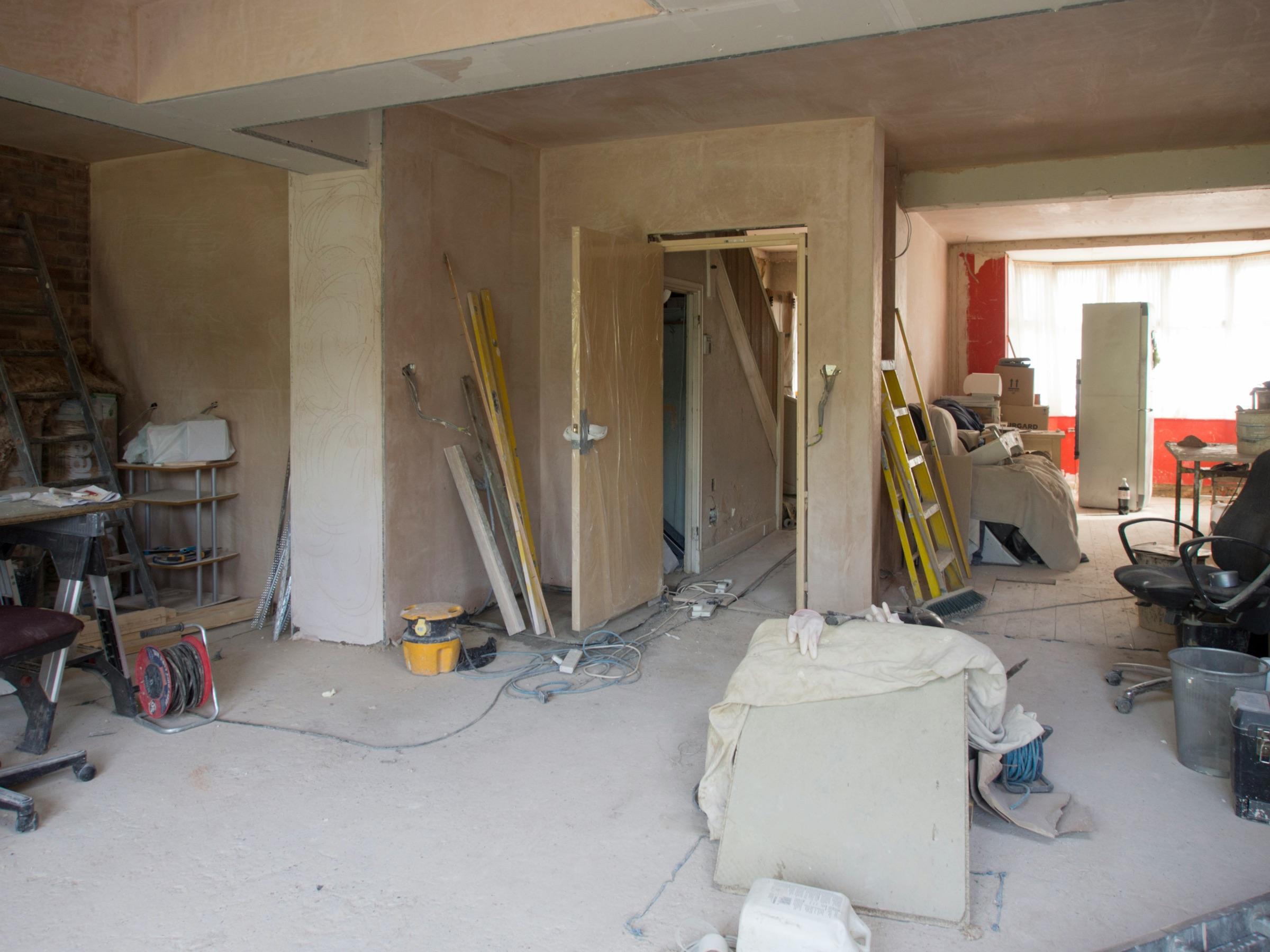
Buyers evaluate price together with condition, updates, location, lot, layout, views, garage, presentation, repair uncertainty, financing terms, timing, and closing flexibility. A construction background changes how those preparation tradeoffs get evaluated — not by assuming every seller should remodel, and not by guaranteeing any renovation’s return.

Home interior mid-renovation, prepared for repair work

Four honest choices

What to Do Before Listing

Improve before listing

Complete higher-impact updates that address a real gap against the competition.

Repair selectively

Fix specific issues most likely to affect inspection or buyer confidence, without a full remodel.

Price around limitations

Reflect a known condition in the price rather than fixing or crediting it.

Sell as-is

List in current condition and disclose accordingly — sometimes the right choice.

See the full Sell a Utah Home walkthrough and the property preparation framework for more detail on this decision.

Utah is not one market

Utah Is Not One Market

The applicable supply, demand, buyer pool, and pricing strategy can vary meaningfully across Utah County, Salt Lake County, northern Utah County, the southern Salt Lake Valley, established neighborhoods, new-construction corridors, entry-level and move-up price points, luxury and distinctive property, and small multifamily or mixed-use property.

01

Wasatch Front geography

Mountains on one side constrain developable land, shaping which areas compete with each other at all.

02

Commute patterns

Access to Silicon Slopes, Salt Lake, and Utah Valley employment centers affects which buyers consider which areas.

03

New construction

New-construction corridors add active competing inventory that resale pricing has to account for.

04

County-level inventory

Utah County, Salt Lake County, and neighboring areas can have meaningfully different supply at the same moment.

05

Property type and price range

Entry-level, move-up, luxury, and multifamily properties each compete in a different buyer pool.

06

Financing environment

Prevailing rates and loan programs affect what buyers can qualify for and comfortably pay.

07

Seasonal timing

Winter conditions and ski-season demand affect showing logistics differently in foothill and mountain areas than in the valley.

08

School and employment access

Proximity to schools and major employers is a real factor in how buyers compare locations.

Row of mountain-modern homes on a residential street

Every county is different

Pricing that accounts for your specific street and county — not a statewide average.

Questions

Frequently asked pricing questions

Does a higher list price leave more room to negotiate?
Not in a useful way. A price set above the market mainly reduces how many qualified buyers see and consider the property in the first place — there's less room to negotiate down from a number buyers never engaged with than to negotiate up from a number that generated real interest.
Can pricing below market guarantee multiple offers?
No. It can widen exposure and buyer interest, but genuine competition still requires enough qualified, motivated buyers to be searching in that range at the same time. A lower price with a limited buyer pool can simply mean a lower sale price.
Why do the first weeks of a listing matter?
New listings typically get the most attention from buyers and agents actively watching the market. That early window is when a well-positioned property has the best chance of reaching every relevant buyer at once — which is part of what creates real competition, if it's going to happen at all.
What if buyers view the home but do not make offers?
That pattern usually points to a gap between price and perceived value, condition, or layout — not simply bad luck. See "Reading market response" above for how to interpret it.
How do active listings and new construction affect pricing?
They're part of a buyer's immediate alternatives, alongside recent comparable sales. A price that looked reasonable against last quarter's sales can still lose to a new, well-priced competitor that just came on the market.
Should sellers price just below a common search threshold?
It's one legitimate consideration — search filters mean a small difference near a round number can affect which searches include the listing. It's a tactic worth discussing for your specific property, not a rule that applies the same way to every price point.
If an offer comes in above asking, does that mean the home was priced too low?
Not necessarily. The original positioning may have contributed to the exposure and competition that produced the higher result. A single strong outcome doesn't retroactively prove a different number would have worked just as well.
When should a seller consider changing the price?
When market feedback — showing volume, buyer comments, competing listings, or time on market — consistently points to a specific issue. See "Reading market response" above.
How does buying another home help me understand my own buyer?
If you're purchasing a replacement home around the same time, you'll set your own search filters, compare active alternatives, and form opinions about which sellers' asking prices feel fair. That's the same process a buyer will go through with your current home.
Does every seller need to use a maximum-exposure strategy?
No. The right approach depends on your property, timeline, and how much flexibility you have — see "Three pricing approaches" above.

Author: Todd McClean, Realtor® | Real Estate Investment Strategist, Mountainland Realty, Inc.. Reviewed July 21, 2026. This page provides general real estate information and is not legal, tax, accounting, lending, securities, commodities, or financial-planning advice. It does not promise multiple offers, a bidding war, a sale above asking, or any specific price or outcome.

Property-specific pricing review

Where Will Your Property Receive the Strongest Market Exposure?

A useful pricing recommendation should consider more than past sales. It should examine your property, current competition, buyer search behavior, condition, presentation, likely financing, appraisal considerations, timing, and your priorities for the sale.

CallTextEmailPlan