MULTIFAMILY INVESTMENT CASE STUDY
What Todd Saw in the Six-Unit Property Other Investors Avoided
Outdated kitchens and swamp coolers discouraged other investors. Todd saw recently replaced major systems and a way to test the renovation strategy on one unit before committing to the entire building.
$1.175M
Purchase price
≈19%
Rent growth per unit
$74,376
Year-one NOI, post-improvement
$41,276
Year-one cash flow after debt service
≈15.6%
Modeled value creation, as a % of total basis
Modeled value is a capitalization-based estimate, not an appraisal, sale price, or guaranteed market value. Current rents have been stabilized; additional rental upside has not yet been established.
At acquisition
Original Acquisition Snapshot
What the numbers looked like on day one, before any improvement was made.
Purchase & rent
- Purchase price: $1,175,000
- Original scheduled rent per unit: $1,050/month
- Scheduled monthly rent, all six units: $6,300/month
- Scheduled annual rent: $75,600/year
- Annual operating expenses: $15,620
- Original cap rate: 5.15%
Financing & total basis
- Total acquisition, improvement, and closing-cost basis: $1,255,000
- Down payment: $838,500
- Original loan: $420,000
- Monthly principal & interest: $2,724.11/month
The $1,175,000 purchase price is what the property cost to acquire. The $1,255,000 total basis also includes the improvement program and closing costs — they are not the same figure, and this case study keeps them separate throughout.
Why he was looking at all
A Legacy Play, Not Just Another Acquisition
The client already owned a substantial portfolio concentrated in financial markets and wasn’t sure he had the time left to wait out a prolonged downturn. He wanted a legacy asset his children could operate and keep improving — at a moment when capitalization rates were lower than when he’d bought before, raising real doubts about whether another acquisition could still pencil.
Several six-unit properties looked more finished in listing photos. After review, none offered a clear value-creation plan — this one did, despite looking worse on paper.
Visible disadvantages
- — No central air — swamp coolers in each unit
- — 1970s kitchens, no dishwashers, no in-unit laundry
- — Outdated cabinets, countertops, sinks, lighting, and hardware
Positive fundamentals
- — Roof ≈1 year old; all six furnaces ≈2 years old
- — New carpet and updated bathrooms already in place
“The property was old. Many of its most expensive components were not.”
The roof, furnaces, carpet, and bathrooms — the items that usually blow up an older property’s numbers after closing — had already been replaced. That didn’t eliminate future repairs or turnover, but it meant the remaining, visible deficiencies were correctable within a defined budget rather than a surprise expense.
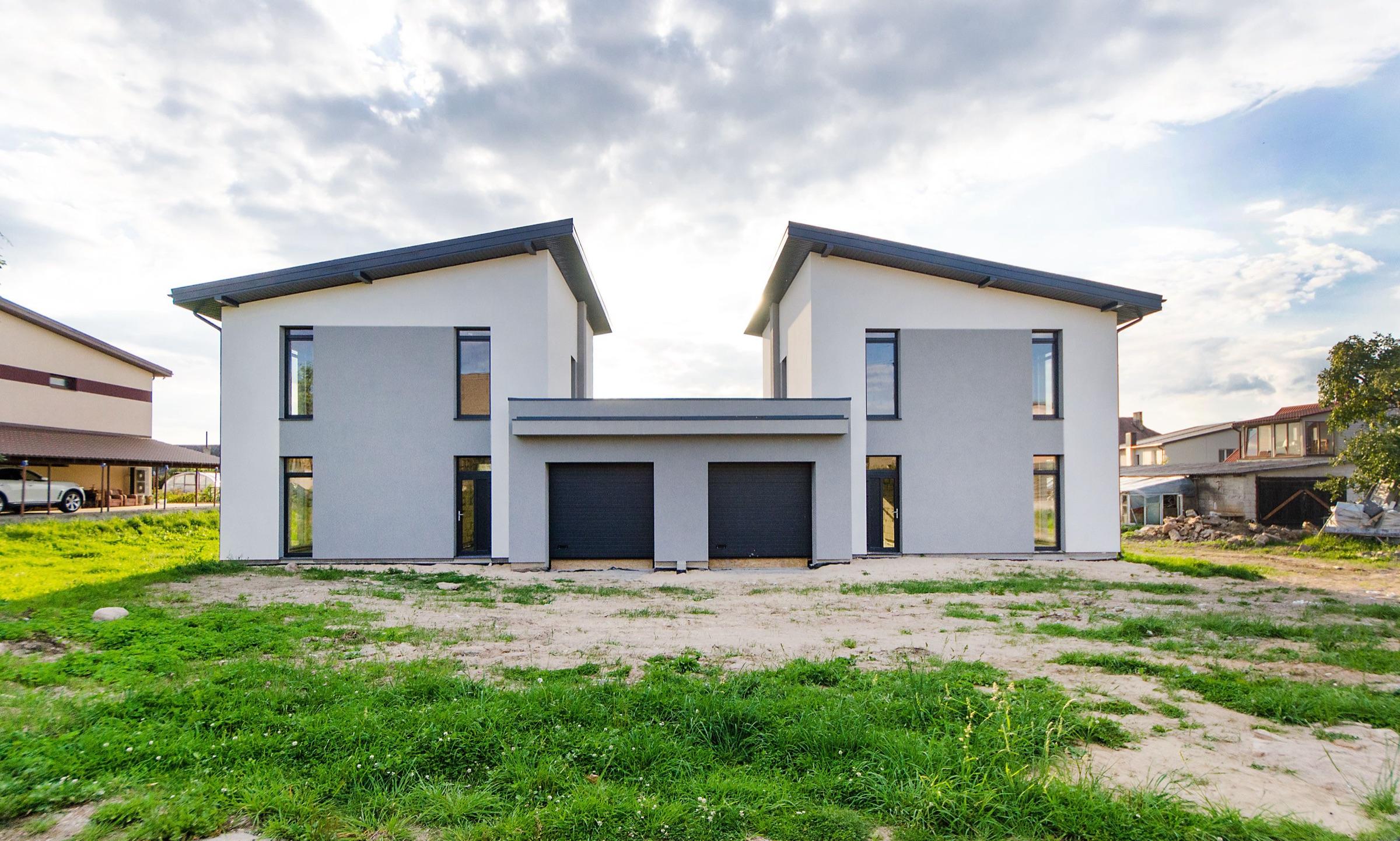
Illustrative image — not the subject property.
What we changed
The Value-Add Plan
The objective was to improve the things tenants would actually notice and value. The renovation combined functional upgrades — including central air conditioning, dishwashers, and in-unit laundry — with kitchen and lighting improvements that made the units more competitive with other rental options.
Functional
Changes what the unit can do
- Added central air conditioning
- Removed/replaced the existing swamp-cooler setup
- Added dishwashers where units previously did not have them
- Added in-unit washer and dryer
Presentation
Changes how the unit shows
- New kitchen cabinets
- Quartz countertops
- New light fixtures
Functional improvements change the tenant experience. Presentation improvements change how the rental competes the moment a prospective tenant sees it. Together, they strengthened the rental product.
Testing before scaling
One Renovated Unit, Before Committing to All Six
The original plan was to add air conditioning to every unit and introduce a modest rent increase at each lease renewal — not a full renovation all at once. To find out whether a complete renovation package was worth the cost, Todd had the owners fully renovate one unit first — new cabinets, quartz counters, a dishwasher, updated lighting and hardware, and in-unit laundry — market it, and watch what happened.
The response was strong enough that the owners moved up the timeline and renovated the remaining five sooner than planned. Some existing tenants did choose to leave rather than pay the higher renewal rent — a real cost in vacancy, turnover, and leasing time, not something to wave away — but the renovated unit’s reception gave the owners confidence the improved apartments would find new renters.
“They didn’t renovate all six units on hope. They tested one first.”
Todd recommended the one-unit market test; the owners approved and funded it; actual renter response supported the decision to proceed. The test reduced uncertainty — it didn’t eliminate investment or vacancy risk.
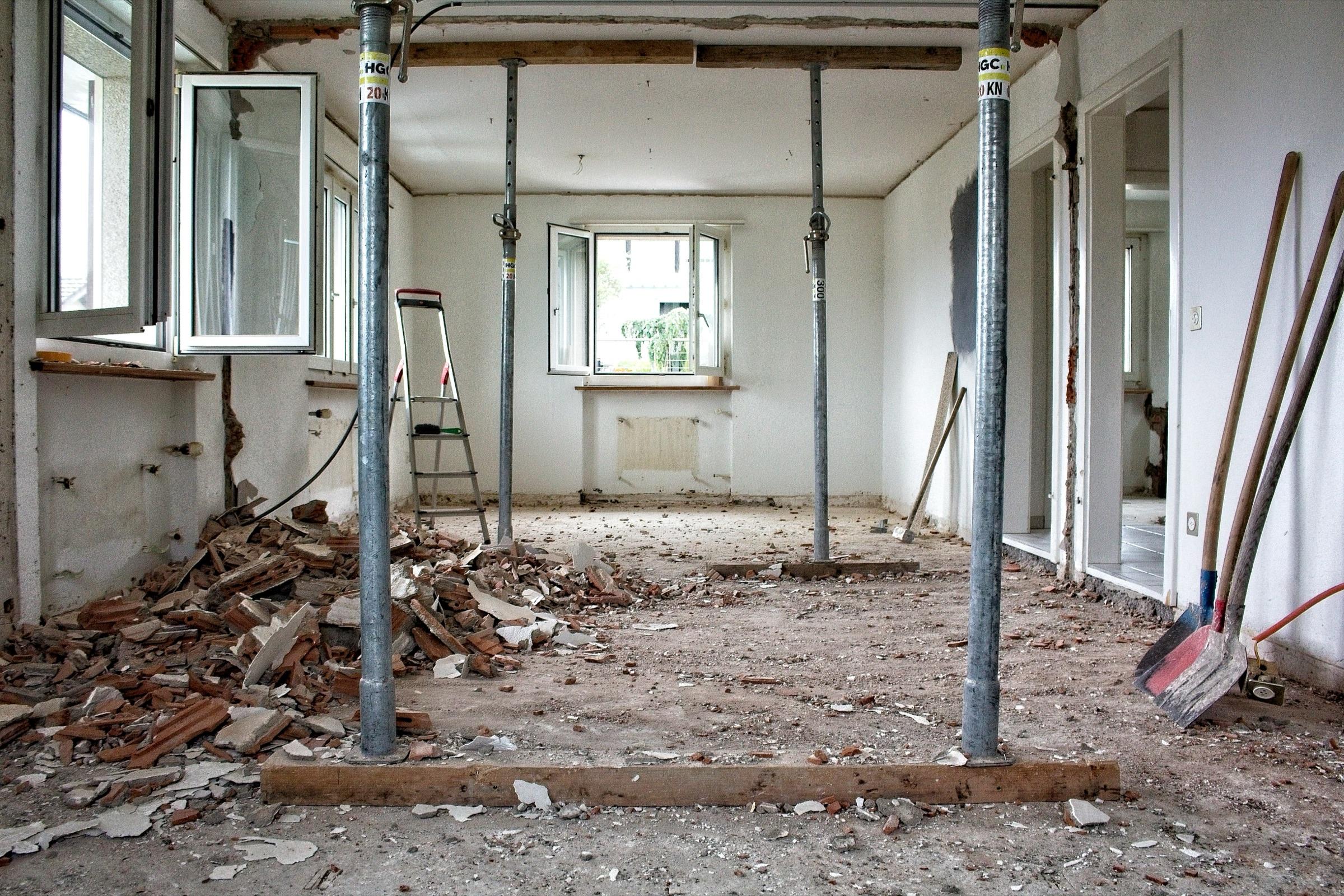
Illustrative image — not the subject property.
What actually changed
Before vs. After: The Rent Transformation
Before improvements
$1,050
Rent per unit
$6,300/month
Scheduled property rent
$75,600/year
Scheduled annual rent
After improvements
$1,250
Rent per unit
$7,500/month
Scheduled property rent
$90,000/year
Scheduled annual rent
+$200
Change per unit, per month
+$1,200
Change property-wide, per month
+$14,400
Change in scheduled annual rent
≈19% rent increase per unit.
How this kind of outcome gets produced
Improvements → Rent → NOI → Value
Targeted improvements
Stronger rental product
Higher rents
Higher NOI
Higher cash flow
Potential forced appreciation
Each step depends on the one before it — stronger rents don't happen without a stronger rental product, and modeled value doesn't move without higher NOI.
Historical, achieved figures
The Numbers, As They Stand Today
Operating results
- Achieved rent increase: ≈19%
- Year-one NOI, post-improvement: $74,376
- Cap rate on total basis: 5.9%
- Annual cash flow after debt service: $41,276
- Approximate monthly cash flow: ≈$3,440
- Cash-on-cash return: ≈4.9%
- DSCR: 2.25×
- Improvements + closing costs: ≈$80,000
Capital structure
- Total acquisition, improvement, and closing-cost basis: $1,255,000
- Down payment: $838,500
- Original loan: $420,000
- Monthly principal & interest payment: $2,724.11
- DSCR: 2.25×
- Capital structure: ≈67% invested equity, 33% financing
The clients didn’t want to maximize leverage — this structure captured some benefit from financing while limiting debt-service pressure and preserving flexibility for vacancies, repairs, or turnover. A DSCR of 2.25× means operating income covered debt service more than twice over — more breathing room, not a claim that the investment is safe or risk-free.
Historical figures above are achieved results, not projections. Current rents are not necessarily the market’s ceiling — more on that below — and future turnover isn’t guaranteed to be this manageable.
Three cap rates, three different meanings
5.15%
Original cap rate — describes acquisition economics, on purchase price.
5.9%
Post-improvement cap rate on total basis — describes NOI relative to the $1,255,000 total basis.
5.125%
Market cap rate used to model value — an analytical assumption, not a market survey.
These three figures are not interchangeable. Each describes a different relationship between income and value.
Why NOI matters in income property
Forced Appreciation: Turning Higher NOI Into Modeled Value
An income property’s value is tied to what it produces, not just what similar buildings recently sold for. Improving the property’s income doesn’t just raise cash flow — it can also raise the modeled value of the property itself.
The strategy was not to rely solely on the market to appreciate. Improving rents and operating income created another potential source of value — forced appreciation, distinct from market appreciation (value changes driven by the broader market, not anything the owner did).
The core value equation
NOI ÷ Market Cap Rate = Modeled Property Value
$74,376 ÷ 5.125% ≈ $1,451,239
This is modeled value — not a completed appraisal, not a sale price, and not a realized gain.
≈$1.451M
Modeled property value
≈$196K
Modeled value above total basis
≈15.6%
Modeled value creation, as a % of total basis
Based on the improved NOI and the market cap rate used in the analysis, the property modeled at approximately $1.45 million — about $196,000 above the $1,255,000 total acquisition, improvement, and closing-cost basis. That modeled value increase represents additional unrealized equity. An appraisal may support the value, a refinance may provide access to some of that equity, and a sale may realize the gain.
Beyond a single number
Where the Economic Return Can Come From
A total economic return on cash — as distinct from an ordinary cash-on-cash return — can draw on several sources at once. Not every category here has a dollar figure attached; some are qualitative by nature.
Cash flow
Income remaining from operations after expenses and debt service.
Principal paydown
Mortgage payments gradually reduce the loan balance and increase owner equity.
Forced appreciation
Improved NOI may increase the value of an income-producing property.
Market appreciation
Long-term changes in the overall market may increase or decrease property value.
Depreciation
Potential non-cash deductions may reduce taxable income depending on the owner's tax circumstances.
Cost segregation / bonus depreciation
Potentially accelerates certain depreciation deductions when applicable.
Cash-on-cash return (≈4.9%) counts only the first of these. A total economic return on cash would also weigh principal paydown, unrealized value change, and estimated tax effects — but unrealized value change is not cash in hand, and estimated tax effects depend on the owner’s circumstances.
What if the cash flow were reinvested? An owner could choose to spend the cash flow, reinvest it in additional property, hold it as reserves, or apply some or all of it toward the mortgage. Those choices materially change the long-term return profile.
Credibility check
What Could Have Gone Wrong
- Renovation costs could exceed estimates
- Rents may not increase as expected
- Vacancy could increase during renovations
- Operating expenses could rise
- Tenant demand could change
- Market cap rates could move higher
- Modeled property value may differ from appraisal or sale value
- Tax treatment depends on the owner's circumstances
The strategy did not depend on every assumption going perfectly. The acquisition needed to make sense before relying on future appreciation or tax benefits. A downside scenario modeled 20% lower rents and a 10-point vacancy increase against the original operating baseline — that scenario still produced positive modeled cash flow, though actual results could differ for the reasons above.
Where it goes from here
Stabilized Rents Aren't the Ceiling
The ≈19% rent increase stabilized the property, but the owners haven’t concluded that’s the market’s ceiling — the units haven’t been marketed with full professional exposure yet. Next up: professional photography, broader platform exposure, and tracking inquiry volume, applicant quality, and time-to-lease as units turn over, to find the real number.
The owners also planned to self-manage. Todd helped them set up inexpensive property-management software to automate rent collection, digital leases, and routine paperwork — not to replace them, but to free up their time for the decisions that actually matter: tenant relationships, maintenance, and leasing strategy.
“The property has been improved and stabilized, but the market hasn’t yet fully tested what the renovated units may command.”
Summary
What Todd Saw
- Major capital items were already replaced, reducing near-term exposure
- The remaining deficiencies were correctable, not disqualifying
- Property-wide A/C could roll out without renovating every unit at once
- One renovated unit could serve as a real market test, not a guess
- Strong renter response justified accelerating the rest
- Some turnover was real — and worth the risk once demand was proven
- Moderate leverage traded some upside for real resilience
- Self-management stayed practical with the right automation
- Stabilized rents are a floor, not proof of the ceiling
Todd’s role wasn’t just to locate a six-unit property — it was to connect a legacy goal with capital-expense analysis, staged risk, real market testing, and a financing structure built to survive a bad year, not just a good one. None of this guarantees the same outcome elsewhere. It’s what disciplined pricing and real testing looked like on this one.
The investment lesson
The lesson was not simply that remodeling apartments can increase rents. The opportunity came from identifying which improvements tenants were likely to value, controlling the capital invested, validating the strategy before repeating it, and understanding how stronger operating income could translate into both greater cash flow and additional property value.
Read the full disclosures
- — This example concerns a specific client, property, financing structure, improvement program, and market environment.
- — Results vary.
- — Modeled property values are not appraisals or guaranteed sale prices.
- — Projected returns are not guaranteed.
- — Modeled value increases are unrealized until a sale or refinance occurs.
- — Current rents have been stabilized but may not represent maximum market rent.
- — Future rental upside has not yet been established.
- — Strong renter interest in one unit does not guarantee identical future demand.
- — Tenant turnover may create vacancy, repair, leasing, and administrative costs.
- — Tax calculations are illustrative and depend on the owner's circumstances.
- — Depreciation, passive-loss limitations, interest deductions, depreciation recapture, and other tax issues should be reviewed with a CPA.
- — Real-estate investments involve risk, including vacancy, repairs, declining rents, financing risk, tenant turnover, and changes in property value.
- — Todd provides real-estate brokerage and property-analysis services, not legal, tax, securities, or investment-advisory services.
Author: Todd McClean, Realtor® | Real Estate Investment Strategist, CENTURY 21 Everest Realty Group. Reviewed July 21, 2026. This page provides general real estate investment information and is not legal, tax, accounting, lending, securities, commodities, or financial-planning advice.
See How Todd Would Evaluate an Investment Opportunity
Next step
Every property, objective, and market is different — tell us about yours.
Real-estate investments involve risk, including vacancy, repairs, declining rents, financing risk, tenant turnover, and changes in property value. Todd provides real-estate brokerage and property-analysis services, not legal, tax, securities, or investment-advisory services.